Pennsy
to Pearl:
My
Life aboard the United States Battleship
USS Pennsylvania BB-38
1938-1942
By
Joseph J. Dzeda
When I was eighteen years old,
living on a farm in Mesopotamia, Ohio, about 40 miles east of Cleveland, a
neighbor came home from four years in the Navy.
He held all the other neighbors and myself, spellbound with his sea
stories of travel on a battleship, the U.S.S. Pennsylvania.
It didn’t take much deciding, and I joined the Navy in June of 1938.
I
went through three months training at Great Lakes, Illinois, and we were paid
$17.50 per month. From that princely sum, twenty cents a month was deducted for
hospitalization.
After
the training was completed, we were assigned to ships.
To my great surprise, I was assigned to the U.S.S. Pennsylvania,
the very ship my neighbor had served on. I
boarded the Pennsylvania while she was being overhauled in the
Puget Sound Navy Yard in Bremerton, Washington, in September 1938.
I couldn’t believe my eyes when I stood on her quarterdeck and looked
up at her fighting tops. I had
never imagined any ship so large, so majestic.
I was actually assigned to a man-of-war.
Deep in my heart I knew this ship was invincible, this regal giant.
I understood why they called this capital ship a man-of-war.
What other term could describe this vessel, with 12 fourteen-inch guns in
her main battery, bristling with many other broadside and anti-aircraft guns.
Truly, this ship was worthy of representing the United States.
She was 104 feet wide, 608 feet long and weighed 30,000 tons.
The
U.S.S. Pennsylvania was a sister ship to the U.S.S. Arizona,
and not identical, but similar to the Oklahoma and the Nevada,
another class of ship. I was glad
the Pennsylvania had the modern tripod masts.
By comparison, the cage masts of the California class
looked frail and old fashioned. The
Pennsylvania, in wartime, carried a crew of 2,500 men.
That seems like a large amount of men, but you must remember that the
whole principle of manning a fighting ship is to be able to man every gun and
battle station for the calculated life of a man-of-war, which is five minutes of
total engagement. All of her
ammunition must be able to be fired in that crucial five minutes. There is no alternative.
The Helena class cruisers, which came to the Fleet in the
late 1930s, boasted they could have 150 shells in the air at one time.
At
sea, the Pennsylvania burned almost 100 gallons of fuel per hour,
per knot. She carried 1,500,000 gallons of fuel, and when fully fueled
went down into the water five feet. Her
main battery, when firing off to the side (never dead ahead or dead astern)
pushed the ship seven feet sideways. The
Pennsylvania was the flagship of the Unites States Fleet and
carried the only sea-going four-star Admiral.
However,
the Pennsylvania didn’t resemble a smart Navy ship when I went
aboard. There were welding cables
strung throughout and civilian workers were busy putting the ship back together.
After we left the yard, in about two weeks, it was another ship, all
cleaned up and polished; it looked like what I thought a flagship of the U.S.
Fleet would look like. I don’t
think there was a man aboard that wasn’t proud of her appearance.
The
peacetime Navy was very smart in appearance.
The travel was great. We
visited Cuba, Haiti, almost all the Caribbean, including the Virgin Islands, and
passed through the Panama Canal. Later,
we went up to Annapolis and Baltimore. The
Admiral addressed a class at the Naval Academy at Annapolis.
I was impressed by the Naval Academy and by its grounds and by what we
were told of its traditions. I had
a healthy respect for the officers it graduated.
While the Pennsylvania was in Annapolis, I managed to get ten days leave. I went home to the farm to spend the leave. It was then that I began having guilt feelings about “running away” from the family farm. Those feelings never did leave me entirely all during the time I was in the Navy. They diminished at times but never did go away. Many times, when I was having a good time or enjoying my Navy life, they hovered close by, always tempering the happy mood.
While
on the train returning to Annapolis after my leave expired, I thought how lucky
I was. A Navy ship, more than any
other way of military life, makes a family out of her crew.
There was never any talk of patriotism or any high-sounding aims.
It was a gathering of men all doing their jobs the very best way they
could. I enjoyed hearing of the
men’s backgrounds: the kid from a Minnesota wheat ranch; the fellow from
Montana who helped run a cattle ranch; the guy who lived in New England and
worked in a textile mill; the fellow from Gilroy, California, who couldn’t
stand the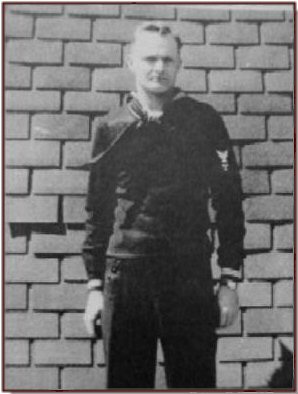 smell of garlic (Gilroy was the garlic capital of the world, and he couldn’t
fit in) and the kid from a large dairy in Tillamook, Oregon.
Each one had his story to tell.
smell of garlic (Gilroy was the garlic capital of the world, and he couldn’t
fit in) and the kid from a large dairy in Tillamook, Oregon.
Each one had his story to tell.
When
on the West Coast, we anchored between Long Beach and San Pedro, California, and
the ship sent liberty parties to either port. We had liberty every other night and every other weekend.
We could travel a great distance in that time, seeing Hollywood, Los
Angeles, or go into places like San Bernardino or Pasadena for sightseeing.
For many of us, it was our first visit to places we’d only read or
heard about while at home. There
was a certain fascination with Hollywood, with its studios and famous streets.
San Pedro was the port of Los Angeles where foreign merchantmen loaded and unloaded cargo by nets and booms. Oil tankers also loaded in San Pedro. You could go on the Pacific Electric interurban car through the oil fields with their pumps working and the heavy smell of oil throughout. There was no smoking allowed as you passed through the oil fields on the cars. It was like a geography lesson to see all the foreign ships with their nation’s flags flying. It brought to mind all the corners of the earth! In the meantime, all the new recruits studied our ship to learn its functions and machinery locations to be ready for tests that were given periodically.
We
were in port for a week or two at a time and then out to sea for about the same
length of time, usually holding firing practice or drills off the islands near
the California coast. That was the
pre-war Navy, soon to change, but no one knew at that time what lay ahead.
The
work in the machine shop was interesting and time flew by.
We all studied the prescribed courses and promotions came easily as soon
as we were eligible, and the studying wasn’t particularly difficult.
If anyone needed help in understanding the text, there was always someone
around to explain it. In the evening, after completing the day’s work, we were
free to roam the various engineering spaces to see what “made the wheels go
‘round.”
The
ship was clean, the food was good and there was plenty of time to see sights
wherever we went. Almost everybody
had a rented locker on the “Pike” in Long Beach where we kept our civilian
clothes, if we decided to be ashore out-of-uniform.
Nevertheless, the feelings of guilt wouldn’t completely go away, and I
was able to calculate the time changes and estimate what my folks were doing at
that time on the farm.
In
the years 1939-1940 the bulk of the Fleet, including the Pennsylvania,
was transferred to what was called the “Pineapple Fleet,” based at Pearl
Harbor, Territory of Hawaii. One
Saturday morning we steamed in column into Pearl Harbor.
We were now with the Pineapple Fleet, and Hawaiian music, the steel
guitar style, was on the radio day and night.
It was my first time in Honolulu, and I thoroughly enjoyed seeing it and
Waikiki Beach.
Soon
the Navy changed drastically and dramatically.
The ship’s light gray paint was now changed to light and dark gray in zigzag
pattern. The teak weather deck
coverings were removed. The wooden
furniture was replaced with steel… or not replaced at all.
All the linoleum inside the ship was taken up and discarded; the heavy
accumulations of paint were scraped and replaced with a single coat.
The sheet metal shop welder was assigned to run a weld bead around every
rivet on the ship; there must have been millions of rivets.
That was to prevent them from flying out in case we were struck in
battle. Radio silence was practiced and privately-owned radios
weren’t used at sea. Many
portholes were removed and plates were welded over the openings. Gas-inflatable life belts were issued. Boats were removed, and in their stead life rafts were
installed. That carried an ominous
sign -- things were getting grimmer.
In
1941 the ship’s launches were taken off and replaced with stackable life
rafts. The one boat that remained was that of our famous passenger,
the four-star Admiral, who carried the title, “Admiral, United States
Fleet.” He was the
commander-in-chief, his was the blue flag with four stars, his blue Admiral’s
barge, and his blue airplane, on the catapult atop #3 turret.
Shortly before December 1941, Admiral Bloch was relieved by Admiral
Kimmel.
But
perhaps more noticeable, we were spending much more time at sea.
We were going further out, and the temperature was getting hotter because
we were ranging further south. There
was much high-speed maneuvering and fueling from tankers at sea, and then
re-fueling destroyers from our tanks night and day.
We practiced transferring men at sea.
Steaming at night, totally blacked out, was coming to be the normal
routine. The ship ahead towed a
spar in the water. With the
effervescence in the water, we’d keep alongside the spar, thereby keeping the
correct distance behind the ship ahead. More
and more capital ships joined in our exercises.
Almost every day there would be another with us, that had joined us
during the night; they were usually new, and recently out of the West Coast.
We
manned our battle stations every morning and evening, more drills and
“problems” were held; sometimes we were at our battle stations hours on end
during the day, as well. This was
becoming a very serious business, lookouts stayed at their stations hours on
end. We no longer entered Pearl Harbor as often as before, but we
now anchored between the islands of Molakai and Maui, in a place called Lahaina
Roads, an old whaling village. No
one was allowed ashore there.
Liberty
in Honolulu ended at midnight, except for married men who lived in town. There were so many servicemen of all branches that there was
hardly room to pass anyone on the sidewalks to town. The tattoo shops and bars did a thriving business.
Almost everyone had more money than he needed.
Most of the sailors went into Honolulu only a few times before it got
boring. Lots of them went only to change the routine of staying
aboard the ship, or just to “stretch their legs.”
The servicemen kept coming from the States, building up the Hawaiian
forces.
Capital
ships from many different nations’ navies began operating with us.
We were still at peace, but Britain had gone to war against Germany, and
the Royal Navy was scattered all over. We
still adhered to the agreement that no capital ship would cross the
International Date Line. The United
States was not an aggressor nation.
On
board the Pennsylvania, we also increased our crew.
As the number of guns increased, so did the number of men required to man
the new guns. There was an increase
in tempo that couldn’t be overlooked; we were getting into a high state of
readiness. The Navy was now “all
business,” with a desire to perfect our drills.
When at general quarters, all the watertight doors were closed; the heat
build-up made the thermometer soar with the ventilation blowers off.
One
day blended into the next. It
wasn’t important what day it was; the routine was of the same tempo, never
slackening. There was one drill after another… except on Sundays, when
divine services were held and breakfast included sunny-side up eggs.
Except for those changes, the drills went on and on.
Then we entered #1 dry-dock about December 3rd, for routine
work with the destroyers U.S.S. Cassin and U.S.S. Downes
in ahead of us. All three ships
were on keel blocks, and the water was pumped from the dock.
I
didn’t know anyone on the Pennsylvania that didn’t hate going
into dry-dock. It meant having to
get steam, water and electricity from “the yard,” which meant there would be
no steam to heat the “coppers” in the galley, which translated into more
cold meals. The washrooms were
closed, and that meant going over the gangway to use the facilities on the dock.
If anyone had to use the facilities at night, he had to get dressed, go
over the gangway and then do it all in reverse again before he got back to
sleep. There was no laundry done and, overall, it was very
upsetting. On the other side of the
coin, we’d be unable to generate steam in the engine rooms and that would be
cool, a temporary respite from the constant, permeating heat of the South
Pacific, which couldn’t be left behind, even for a minute.
It surrounded us like our own personal envelopes, it was with us whether
we were eating, sleeping, working, writing a letter or just sitting in a chair.
The engine room crews would do their work in their skivvies (under shorts)
and when we were at practice general quarters, the ventilators were turned off,
all water-tight doors were closed and we could feel the rivulets of sweat run
down our backs and trace them, in our minds, as they coursed down our legs, into
our socks.
When
we were in our bunks, we tried as best as we could to lie as still as possible
to keep from rubbing against the sheets and creating any friction at all, which
would result in more sweat. In the
morning, the living compartments, including the “Guinea Pullman” which were
the original coal bunkers when the ship was a coal burner, reeked from human
perspiration and lack of ventilation. When we awakened, we jumped out of our bunks to get away from
that atmosphere, but we headed right into another long day of heat and sweat.
At
least for the time we’d be in dry-dock, we’d be spared that, and we got to
walk on the dock for a while to cool off, before going back to the ship.
But we were so used to it that no one complained, and if it bothered
someone, he tried to make a joke or lighthearted comment about “what are we
going to do when summer comes?”
On
that particular Sunday, December 7th, 1941, early in the morning, I
was in the living compartment of our division, looking for something to read,
shuffling through the stack of magazines on the table.
We were to have left the dry-dock a day or two before, but it was deemed
necessary to hold the three ships in over the week-end to complete some
“optional” work. That meant
limited electricity and water, which were furnished by the Navy yard.
Our propellers were lying on the floor of the dry-dock.
In
the early hours of that Sunday, Army Sgt. Lockhart was practicing with a new
device the Army had just received. While
practicing with the radar, he detected a flight of planes on the scope. Notifying his commanding officer of what he detected, he was
told to ignore it; the Army had a flight of B-17s coming in from the States.
Besides, we were not at war, and an incoming flight of planes was
“nothing to concern yourself about.”
About
four miles off the mouth of Pearl Harbor channel, the target-towing ship, U.S.S.
Antares was approaching the harbor.
One of her lookouts spotted what looked like a broom handle in the water.
The U.S.S. Ward, an old destroyer, was nearby and sighted
the conning tower of a submarine. There
could be no doubt about what it was. Since
we had no submarines in the vicinity, the Ward, on its second
shot, hit the conning tower and the debris that came to the surface told of the
sub’s fate. Upon reporting this
to the base commander, they were told to investigate further.
It seemed logical at the time. We
were at peace.
Now
it was five minutes to eight that Sunday morning.
The color guards were standing by on all capital ships to hoist the
colors at exactly eight o’clock, which was routine.
It was a typical Hawaiian day, small puffs of clouds and a warm breeze.
Men were leaving the smaller ships to go to divine services ashore,
because the smaller ships had no chaplains.
I
was in our division’s living quarters on the third deck.
No portholes to see out of. All
of a sudden, my attention was riveted to the hard running and the hollering on
the deck above, which was normally quiet. Muffled
explosions. It kept up until the
loudspeaker broke in, screaming, “All hands man your battle stations on the
double. This is no drill!”
Then the General Alarm gong began its irresistible, mournful clanging.
As soon as I heard the gong, I ran out of the compartment on the same
deck to the forward end of the ship where my battle station was, almost the full
length of the ship. Over and over
the loudspeaker repeated its message, “This is no drill!”
The General Alarm gong kept up its demanding clanging until the last
battle station reported, “manned and ready.”
I
reached the hatch to the forward high-pressure air compressors, which were used
to blow the gas from the main battery gun barrels and to push the guns back from
the recoil position to battery position so they could be ready to fire again.
I went down the hatch five decks and started both of the mammoth
machines. The noise was deafening
and they vibrated as if they’d like to walk off their mountings.
Opening up the cooling water valve, which gave out only a trickle, I
watched the pressure gauge begin its climb.
I thought there would be enough water to cool the compressors while
running, but only barely. I was
quite confident they’d not fire the main battery now; the recoil would most
likely knock us off the keel blocks we were sitting on in the dry-dock.
I
had just reported to our engineering post that the compressors were coming on
line. No sooner had the pressure
reached 1,000 pounds-per-square-inch (the pressure was to be kept at 3,000 psi)
when the loudspeaker in the compressor compartment called, “Away the fire and
rescue party. Report to the
quarterdeck on the double!” I
took one last look around, put the control on “automatic,” and scurried up
the ladder three decks to the machine shop where there was a locker with canvas
bags of tools for the fire and rescue parties.
Each bag had different tools in it; each had the member’s name on it.
I grabbed my bag and the lights went out!
Total darkness. Then, off in a distance, a battle lantern came on, giving me
just enough light to make out the silhouette of obstacles I had to pass, but it
was enough.
As I
reached the quarterdeck two decks above where we were to assemble, the sunlight
was blinding. The fire and rescue
party was already forming. There
was nothing to do now but wait. The
sky was blue, bright and the temperature balmy warm.
Puffs of anti-aircraft fire showed in the sky, but I hadn’t seen any
airplanes yet. Someone said we were
being bombed by the Japanese Naval Air Force.
I hadn’t seen any. The
rumor was that we were waiting for a small boat to take us to a stricken ship. An officer was beginning to line us up so he could send us to
the Arizona. She had
been hit, and fire was spreading in her. She
had asked for help. While waiting,
I looked around the harbor, which had turned into an inferno. Low black, dense clouds of smoke lay on the water; we were
surrounded by the deafening and incessant firing of hundreds of anti-aircraft
guns.
One
of the men waiting with us offered the thought that if the Japs hit the caisson
that kept water out of the dry-dock, we’d be pushed right up onto the top of
the destroyers ahead of us. Luckily,
the Japs didn’t get it done. Most
likely all three of the ships would have suffered heavy casualties.
From where we stood on the quarterdeck, we could see men swimming in the
water of the harbor. They had
either been blown off their ships or had jumped into the water to avoid being
burned from the fires aboard their ships. They
were burned and wounded, and they screamed to the small boats for attention.
There was much confusion and men were hollering, trying to hail boats
that passed near them, trying to get picked out of the water.
By now the Arizona was blazing badly, the flames climbing
high into the smoke. As I watched,
it seemed she exploded and lifted out of the water a bit and her foretop began
to lean over onto the forecastle. It
didn’t take long to determine she was in her death throes.
She looked like she was done for.
The West Virginia was lower in the water than I had ever seen her, and I knew she was out of action. The California was settling into the water. The deck officer walked toward us slowly, like one who is about to announce a death. He said, “Detail secured, go back to your battle stations.” I started back into the ship to return the tool bag to the locker in the machine shop
Going
through a door off the weather deck, I entered the compartment where our
complement of about two hundred Marines lived.
I was struck by the fact that something was wrong here.
I was in a place where there should have been darkness, due to the two
decks above, but instead it was bright. I
could see the sky above! Something
had happened to let the light onto the main deck where I was standing.
In the ship’s Marine detachment living quarters, the deck above had
been ripped open. We had been hit
by a bomb while I waited on the quarterdeck to go to the Arizona.
I had been no more than a few hundred feet away and didn’t even know we
had been hit. A 500-pound aerial
bomb had struck our boat deck, penetrated that, and exploded when it struck the
base mount of a five-inch broadside gun. The
very gun the Marines had been manning. The
gun seemed to be leaning on an angle. There
was the heavy smell of gunpowder and an unfamiliar smell that I couldn’t
identify. The bomb had killed
everyone near the gun, both the Marines and sailors in the vicinity.
Quickly
I looked around. This was
unbelievable; it was obscene, and it just couldn’t be.
The personnel lockers had been blown open. Their clothes were strewn all over, along with shaving gear,
towels and uniform parts. In front
of one of the lockers lay a Marine’s brown shoe.
A leg was in it; it looked like it would have been up to knee.
To the left, maybe a couple of yards away, a human rib cage was oozing a
fluid. The compartment was lit up
by the light coming in from the ripped-open deck above.
Leaving
that compartment, I was making my way down to the machine shop holding the tools
in my hand, my other hand on the ladder rail, in case the lights went off again,
which they did. Again a battle
lantern provided just enough light to make travel possible.
The
chief in the machine shop told us to go to the 5-inch anti-aircraft ammunition
hoist just outside the machine shop. With
the electric power off, the only way to get ammunition to the upper decks was to
pull on a hoist chain, which turned the hoist. There were about five men pulling
on the chain, raising the ammunition four decks up.
I stood next to a sailor whom I knew was from Indiana.
He was pulling the chain and crying.
His hands were bleeding; the chain had taken the skin off like a rasp
file. He pulled on the chain even
with blood running down his arms from his hands.
Sweat was running into his eyes and his sobbing grew louder, but still he
stayed at his battle station. It
made me feel bad that I could do nothing to help ease his pain.
Silently we pulled, side by side; no one could have made a nobler effort
than he.
At
that point even the battle lantern went off.
It was like working in a cave. The
only time we had any light was when someone ran past with a flashlight making
little temporary spears of light. Then
total blackness again.
After
a period of quiet, the loudspeaker again screamed, “Away the fire and rescue
party; frame 50, starboard side!” I
knew just about where frame 50 was, but running back for the tools again, it
dawned on me that he hadn’t said which deck to go on.
No matter. Just follow the
others in the rescue party.
On
arriving on the forecastle, I was drenched with water.
A fire main, about eight-inches in diameter had been completely broken
off. Water was squirting way up
into the air. One of the destroyers
in dry-dock with us (the U.S.S. Downes), had been hit in the
torpedo tubes where five torpedoes with attached warheads exploded.
A part of the mount flew into the air and landed on our forecastle at a
junction of the fire main, rupturing it. There
was no way to repair the break at this time.
Aside from shutting it off so other parts of the fire-fighting system
could still be used, there was nothing we could do.
Now we had no water on the starboard side to fight a fire should we be
hit again. The total darkness was
everywhere; everyone followed the beam of a flashlight.
The
other destroyer, the U.S.S. Cassin, had also been hit at the same
time, causing her fuel oil tanks to catch fire and explode, tearing the ship’s
skin off, as she rolled over on her starboard side, exposing her “innards”
for all to see. It was an unusual
and gruesome sight, to see all the ship’s ribs.
While
waiting for the chief of the damage control party to make a decision about what
else could be done, I walked over to the rail, which gave me the chance to look
aft. I got a good overview of the
harbor. The giant column of smoke
we saw was coming from the U.S.S. Arizona which had been mortally
damaged. She had taken a hit
between #1 and #2 turrets; the bomb had penetrated into the magazines causing
them to explode. So much heat had
been generated that her foremast had crumpled onto her forecastle.
I was sure, as were others, that the Arizona had taken the
beating that was meant for us. She
was a sister ship of the Pennsylvania, and had an identical
silhouette to the dive bombers. The
Japs knew we carried the Admiral of the Fleet, the brains.
The Pennsylvania had often berthed at Fox 7, where the Arizona
was now. We, in the meantime, were
in the dry-dock, a distance away, and we had originally been scheduled to have
been out of the dry-dock. We were sure the Arizona had been our
destination when the fire and rescue party first had been called away.
The
entire harbor seemed to be boiling with activity.
Small boats were scurrying around trying to get men out of the water and
off overturned ships. Others were
low in the water, lower than we had ever seen them.
Fire hoses were pouring water on the fires and trying to cool the hulls
down. Ships were firing at
high-level bombers, but we couldn’t see them from where we were standing,
because our superstructure was in the way.
We were eye witnessing what was going on, while the men below decks had
to rely on the “talkers” (the men on the phones) to tell them.
Where
previously there was fear and terror in us, now I saw a “settling down” and
the men were doing their tasks with a cool resolve.
Now they were out to “get the bastards,” and they were getting
confidence that they had the weapons to inflict damage on the marauding Japs, if
they got the chance. Fright can
stampede one into half-thought-out actions.
Cool thinking can accomplish so much more, and the Pennsylvania’s
crew had now settled down to do what they were trained to do.
Again we were dismissed to return to our battle stations.
Picking
my way back carefully toward the machine shop, I had to pass the ship’s post
office and “scuttlebutt,” a large drinking fountain.
There I noticed a group of men working silently, putting objects in a
neat row, side by side on the deck. The
lights came back on, almost blinding everyone after being in the total darkness
for so long. I had to brush against
the men as I passed, and I saw they were laying bodies on the deck.
I noticed that all the dead that I could see had one thing in common;
they were either naked or nearly naked. They
had no visible injuries. I asked
one of the men what had happened to them, since they looked as though there were
nothing wrong with them. “Concussion,
I guess,” he said as he continued to search for identification on the bodies. It was hard to believe, looking so natural, that they were
dead. For the first time, I
realized our losses were right here, right at home.
I
had to move on; others were coming up to see what was going on, and it was
beginning to get crowded. About a
hundred feet away, the lights went off again.
I thanked myself for having been observant enough about the ship to know
where every obstacle would be. As I
picked my way back to the machine shop, I wondered if anyone I knew had been
hurt or killed in that group. When
I entered the watertight door of the machine shop, I realized that one of the
dead was one of three brothers aboard the ship.
They were a jolly threesome from North Platte, Nebraska.
Then a thought raced through my mind… I wondered if the other two
brothers knew yet.
Finally,
things began to quiet down, and I took the opportunity to find out how many of
my close friends were injured or lost. In
the machine shop we tried to reconstruct what had happened to us that day.
As I passed the clock in the machine shop I noticed it was reading
eight-fifteen. I asked someone if
that was the correct time. Looking
at his wristwatch, he answered, “No, it’s just after two.”
I couldn’t believe it. I
had just lived the fastest six hours of my entire life.
Our casualties, I found out later, were 87 men killed, with another 200
injured badly enough to be sent to the hospital in the Navy yard.
That
night we had stew for supper. Someone
at the same table I was at found a piece of gauze in his stew, with
“something” attached. No one
even cared to look, or comment on it. We
just paid a little more attention to our stew and ate in silence.
No one on the ship had yet begun to fully realize how much the Fleet had
been damaged. It was a nightmare,
and so much greater than anyone could imagine.
There was little talk for the remainder of the meal, which we ate with
the lighting going on and off, mostly off.
While
sitting there staring into my bowl of stew, it slowly began to pass through my
mind how many things would now be changed forever.
Something none of us at that table had any control over had happened. Suddenly and with irreversible finality, our lives would be
altered forever. And a lot of
others’ lives as well. Automatically
my enlistment, which had only six months to run, would be extended “for the
duration.” We all knew that;
we’d talked about it many times before in some of the “what if”
discussions.
I
wondered how the mothers, girl friends and family members would react to the
news that their family members wouldn’t be coming home, or were mangled and
lying in a hospital somewhere. I
thought of the dead I’d seen up to now, and I was sure there was going to be
lots of weeping and heartache in the families those kids came from.
The
hard part was to accept the fact it all happened so quickly, in a place hardly
anyone knew about, and it was so final. That,
the finality, was recurring in my thoughts, over and over again.
From now on, the course of so many peoples’ lives would be so different
from what they had planned. I
thought about a few men I knew in my division that were to be discharged very
soon and had made plans to return to civilian lives.
No longer. That was all gone
now. The burning and wrecked ships
made sure of that. No one would be
going home now for a long time.
How
about us, those sitting there eating our stew?
How long would this little family be together?
We had become a small unit that lived, ate, slept and worked together in
a small part of the ship, almost to the exclusion of the thousands that had, at
sometime or other, made up the entire crew.
We knew each other’s backgrounds and much personal information, as well
as each other’s dreams. All that
was gone now…
How
long would it be before this little family would be broken up and sent to
God-knows-where on who-knows-what ships to train and then to fight the Japanese?
All of our destinies were now in someone else’s hands; we’d just have
to watch it unfold and do the best we could to cope with whatever the future
held. It was very unsettling that
we had so little to do with shaping it all.
After
securing from general quarters, a group of us went to the boat deck to get a
better view of the Navy yard. Ships
were still burning and there were efforts to free men trapped in the overturned
hulls. The Oklahoma
had many men trapped in her overturned hull who would be freed days later. It was easy to see a monumental task was ahead for everyone.
The Nevada had managed to get underway and was heading for
the channel when she was ordered beached. It
was a wise decision. The Japanese
had submarines inside and outside the channel to sink any vessel that would try
to escape, like putting a cork in a bottle.
The list of other ships and their damage was like a litany.
They had all been involved, and nineteen capital ships had been sunk or
damaged. How could these majestic,
regal, enormous ships be so badly mauled so quickly and so badly beaten?
They hadn’t even had a chance to fight.
On
the dock, which was just a little lower than the boat deck we were standing on,
another group of men was working with more dead.
That seemed to be the gathering place to identify the dead and place them
into canvas bags. Later I learned
that the dead in the canvas bags were transported to “Red Hill,” behind
Pearl Harbor. The Navy had been
digging an ammunition dump there, and it would be the temporary site of the
grave until more could be done with the bodies.
As I watched the silent work, it seemed the men were handling the dead
with gentle care, as though they didn’t want to hurt them further or disturb
them. It was a macabre sight.
Later
that night, we were again called to general quarters.
Radar had picked up two aircraft coming in and they were shot down.
They had come from California and weren’t on the correct sector.
The anti-aircraft batteries weren’t taking any more chances.
The
next morning we slipped away from our jobs long enough to again go topside to
see what we could. Some of the
ships were still burning, some had turned over, and others had settled on the
bottom of the Pearl Harbor channel. The
Arizona, her foremast collapsed forward onto her forecastle, was
the subject of the classic photograph later used in news photos around the
world.
About
a thousand yards from the ship, in a mangled heap of twisted skin, lay the
remains of two Japanese planes, their “Rising Suns” plainly visible to us. Strangely, they didn’t even get a second look from the
sailors passing next to them. No
one was even taking souvenirs.
The Cassin
and Downes, the two destroyers in dry-dock with us, lay there,
a sorry sight in all their misery, indescribably torn apart and smashed.
The Cassin had even been knocked off of her keel blocks.
Both ships were scrapped at Pearl Harbor, but their machinery was sent to
the Mare Island Navy Yard in California and used in other damaged destroyers.
Some parts of them lived to fight the Japs.
Within
a few days after the Japanese air raid, the Pennsylvania returned
to a “normal” routine… or as close to normal as it could.
But the changes we all had anticipated began to happen quicker than
anyone could have foreseen.
Crewmembers
from the Pennsylvania were being transferred to the ships that had
lost the services of their own men, and we began to get survivors aboard from
other ships, to give them, at least, a temporary home.
Everyone did his best to welcome them aboard our ship and to make it a
short acclimation period.
Although no one dressed in whites or made any pretensions that nothing had happened to change our way of life, the Navy tried to boost the morale by cleaning up the ship and keeping the crew busy with details that would keep their minds occupied with constructive things. Within a week or so, the scope of the damage inflicted on the U.S. Naval Fleet was apparent. We had suffered a staggering loss. Wherever men congregated, it was always the foremost topic of conversation, if for only a few minutes. Almost every crewmember on the Pennsylvania had an acquaintance, or knew someone from his hometown, or had a relative on one of the other ships that had been hit. Once that person told his story, it was brought back to the Pennsylvania, mostly to compare how lucky we were to have escaped as easily as we had. But always the specter loomed about as to when we would be “ready enough” to join the Fleet that was still able to fight. More so than ever before, it was a strange feeling that the most anyone could do was watch it all unfold and be powerless to change anything.
Yet the morale
was surprisingly high. No one
appeared to be downhearted, or at least we did a good job of concealing it.
Within the confines of the Pennsylvania it was not hard to hold a
high morale. We were returning
to being in a high state of readiness, from being a ship and crew torn apart
by the Jap bombing.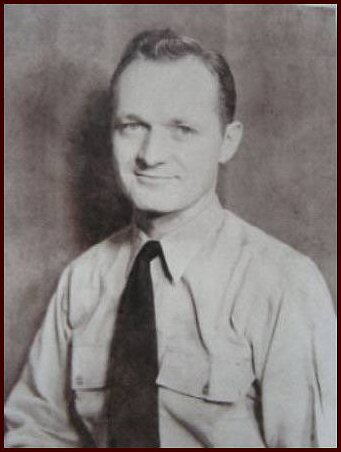
It was only
when looking about the Navy yard that it was brought to mind how much we had
lost. Many of the ships looked
as though there wasn’t enough there to save.
They were so badly mauled one wouldn’t know where to start
repairing them.
On the afternoon of December 21st, we left Pearl Harbor in such secrecy and haste that twenty Navy yard workers who had been working aboard went with us and two other battleships to the West Coast. They hadn’t had time to get off. We went to San Francisco, being under way on Christmas Day in a damaged and bloodied ship, while two other battleships were sent to the Bremerton, Washington, Navy Yard for repair. After temporary repairs and the installation of more anti-aircraft guns, the Pennsylvania left for battle practice near the Marine invasion of Guadalcanal, in case we were needed. We weren’t. I left the Pennsylvania in August 1942, in Pearl Harbor, returning to the States for new construction.
The “new
construction” turned out to be the U.S.S. Cascade, a new
destroyer tender. I stayed
aboard the Cascade until December 1944, having serviced
destroyers from Funafuti, Tarawa, Kwajalien, and into Ulithi.
Ulithi was the “jumping off” place for the Philippine invasion. For my work on the Cascade, I received a
personal commendation from Admiral Nimitz.
The Cascade was a real “workhorse,” having had only
a few days off in a period of eleven months.
We stayed at Pacific sand spits that only God and we knew existed,
but it was a satisfying job with its own rewards.
It was with some second thoughts that I left the Cascade
and returned to the States.
Upon
arriving in San Francisco, I was assigned to an “E-3 Unit,” which is the
land-based equivalent of a destroyer tender.
We had a large machine shop, as well as all the other shops normally
found on a repair ship. We had
experienced men and large capacities, but by then the war had moved far west
and had left us behind. Had we
been a ship, we could have kept up with the war as it moved west.
We did get some battle damage to repair and ships to work on, but it
was largely “wait.” When
the atomic bomb was dropped on Hiroshima and Nagasaki in 1945 we knew it was
only a matter of months until we would be home.
My last assignment was the machine shop at Adak, in the Aleutians.
I left there in December 1945 and returned home to Cleveland.
… Joseph J. Dzeda
Joseph J. Dzeda was born in 1919 in Cleveland, Ohio. He learned the trade of machinist aboard the U.S.S. Pennsylvania, and later became a tool and die maker. He retired as a foreman of the Towmotor division of Caterpillar in 1980 and died at his home in South Euclid, Ohio in 1995.
A special thanks to Bruce and Joseph Dzeda for sharing this with all of us.
© Copyright 1991 - 2003 Joseph
& Bruce Dzeda
© Copyright 2003 usspennsylvania.org